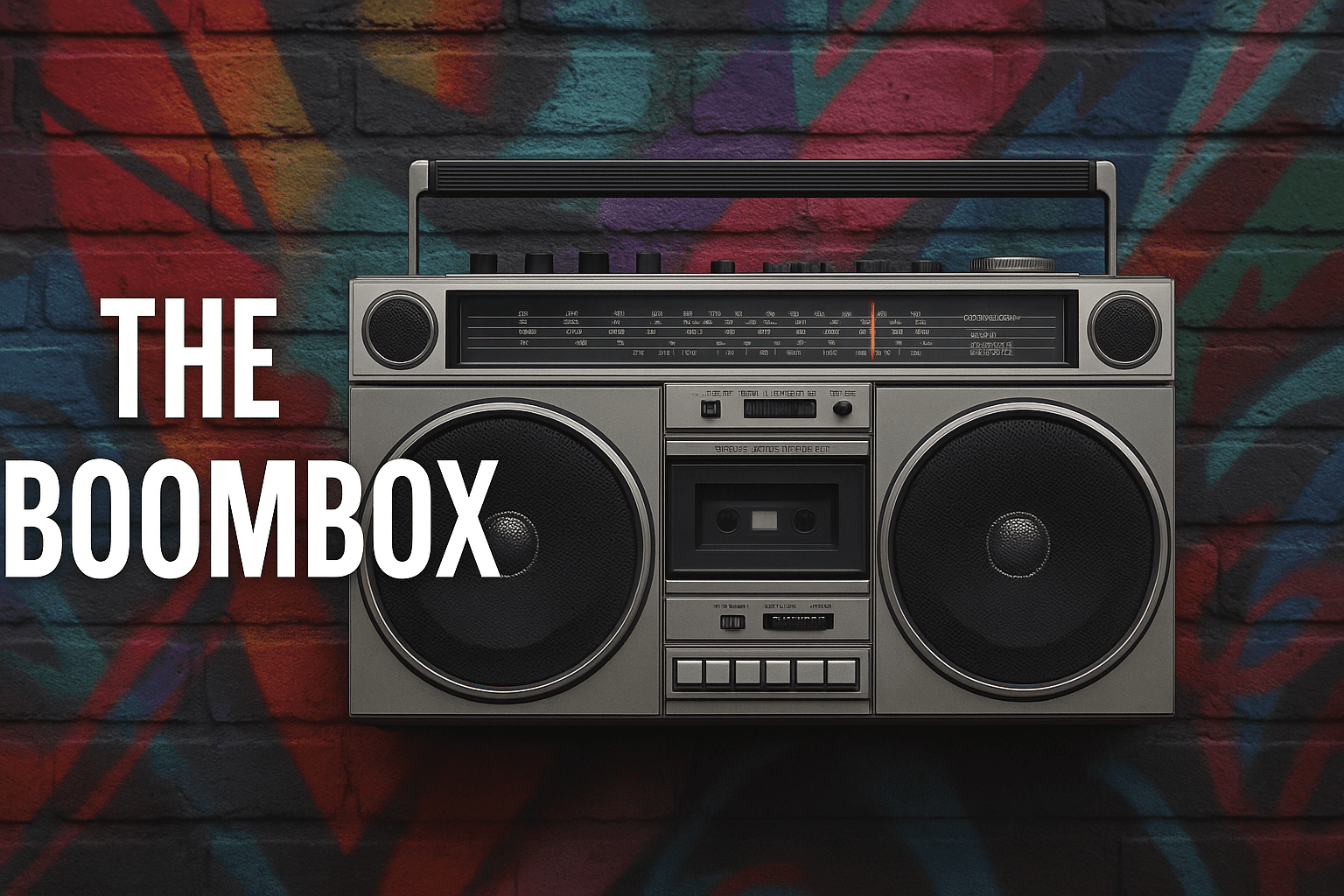
The boombox wasn’t just a machine it was a movement. Born in the 1970s, this portable sound system carried the power of a living room stereo and put it right into the streets. With its chunky speakers, cassette decks, and bold chrome edges, the boombox became both a cultural icon and a personal stage for anyone who wanted to share their soundtrack with the world.
From Japan to the World
The story starts in Japan, where companies like Panasonic and JVC built the first “radio-cassette recorders.” By the late 1970s, these machines had spread worldwide, finding a home in New York City neighborhoods where hip-hop was just beginning to take shape. For the first time, kids could bring beats to the park, plug into power, and start a party right there on the sidewalk.
Hip-Hop’s Megaphone
In the 1980s, the boombox became inseparable from hip-hop culture. Artists and DJs relied on its thunderous bass and portable power to spread breakbeats and rhymes. Graffiti, breakdancing, and boomboxes blended into a single identity a visual and sonic rebellion. The media dubbed them “ghetto blasters,” a name both celebrated and criticized, but there was no denying the influence.
Style Meets Sound
The bigger the box, the bigger the statement. Dual cassette decks allowed for tape-to-tape copying, fueling the rise of mixtapes and underground distribution. Some models even boasted equalizers, flashing lights, or multiple speakers stacked across their frames. Carrying a boombox on your shoulder wasn’t just practical it was a declaration of presence, volume, and style.
The Decline and Legacy
By the 1990s, compact Discmans and MP3 players began to shrink music into pockets, leaving the oversized boombox behind. Yet its spirit never died. Today, Bluetooth speakers echo the same dream: music everywhere, anytime, shared with anyone. The boombox remains a symbol of a golden era when sound was heavy, raw, and proudly carried down the street.