How Music Streaming Conquered the World
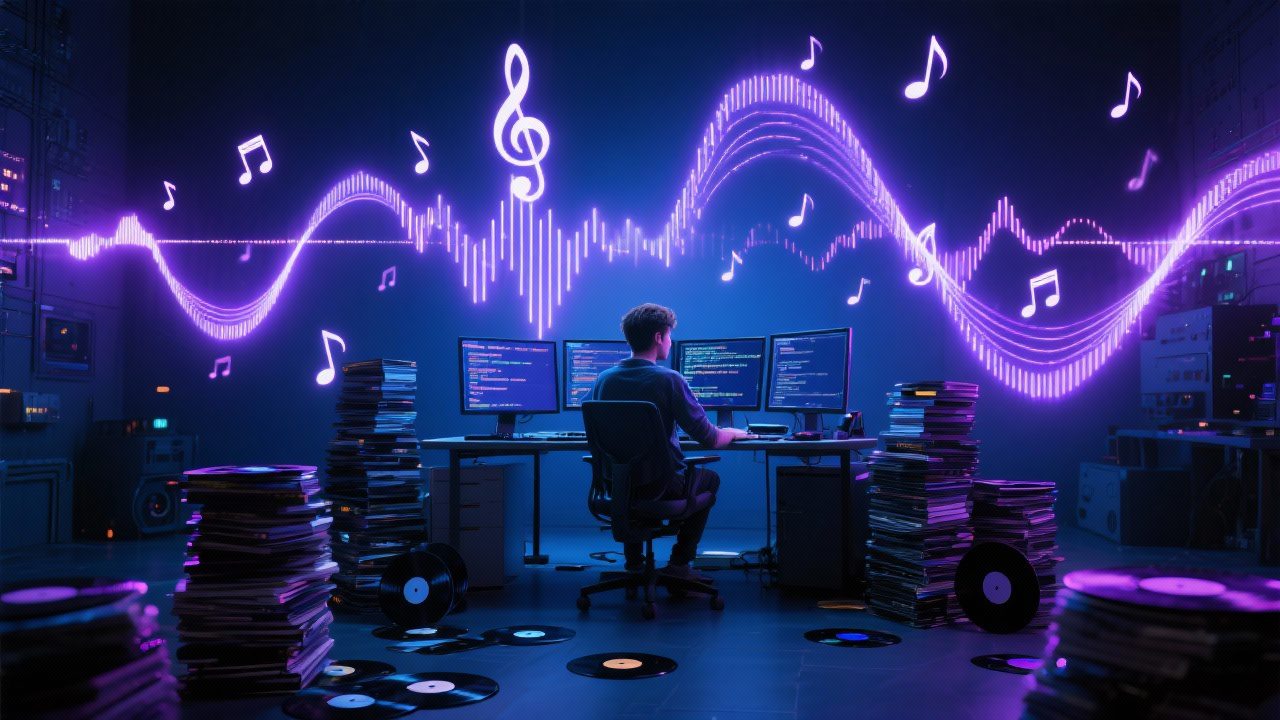
In the summer of 1999, while record executives counted their billions from CD sales and dismissed the internet as a passing fad, a 19 year old Swedish programmer named Daniel Ek sat in his childhood bedroom, surrounded by towers of pirated CDs and the blue glow of computer screens. The air hummed with the whir of cooling fans and the distant sound of his mother calling him for dinner, a dinner he would skip again, lost in lines of code that would eventually reshape how humanity experiences music.
Ek was not the first to dream of streaming music. Forgotten pioneers in the early 1990s, watching their 56k modems crawl through compressed audio files, imagined a world where every song could flow through fiber optic cables like water through pipes, reaching any listener, anywhere, instantly.
But dreams and reality stood divided by an ocean of opposition.
The Fortress of the Old Guard
The music industry of the late 1990s was a medieval fortress, profitable and impenetrable. Record labels thrived on artificial scarcity: press physical albums, ship them to stores, and sell consumers a $15 disc for one good track hidden among the mediocre.
Then came Napster.
Teenager Shawn Fanning unleashed peer to peer file sharing like a digital plague. Suddenly, teenagers traded entire libraries for free with the click of a mouse. Lawsuits rained down as the Recording Industry Association of America declared war on its own customers.
Napster was chaos, but it proved a truth: the world wanted instant access to music. What it needed was not anarchy, but architecture.
The Architect of Sound
Daniel Ek saw what executives missed. People were not stealing music out of malice, but because legal options were inferior. “You have to compete with piracy,” he later said.
His vision was simple yet audacious. Build a platform so fast, so comprehensive, and so seamless that piracy would become obsolete. Music would stream instantly, legally, with no waiting.
The challenges were enormous, from server farms to licensing negotiations with hostile labels. But Ek had the patience of a believer.
The Breakthrough
In October 2006, Spotify launched in Sweden. It worked. Instantly. Users searched for songs and played them immediately in high quality. Supported by ads, or unlocked by premium subscriptions, the model converted pirates into paying customers.
Sweden was the laboratory. America would be the real test.
The American Invasion
Spotify arrived in the U.S. in 2011, facing a market already familiar with Pandora. But unlike Pandora’s radio style, Spotify offered true on demand listening. The labels, wary but desperate, demanded equity and guarantees. Ek agreed, knowing survival depended on access.
The gamble paid off. Within two years, Spotify reshaped how people thought about music. Why own albums when everything could be streamed?
The Streaming Wars
Success brought competition. Apple Music launched in 2015, Amazon bundled music with Prime, YouTube and Tidal entered the fight. The wars were fought with exclusive releases, user loyalty, and algorithmic recommendations that seemed to read listeners’ souls.
Spotify’s true innovation was data. Listening habits became valuable currency, reshaping not just how music was consumed, but how it was marketed and discovered.
The Reckoning
By 2020, streaming had won. Physical albums shrank to niches, downloads became relics, and Spotify reached hundreds of millions of users. But victory brought backlash. Artists complained of tiny payouts. Millions of daily uploads drowned individual songs. Algorithms became new gatekeepers, as powerful as the executives they replaced.
Ek, once the revolutionary, now defended an empire accused of the same greed he had once challenged.
The Long View
Today, music streams instantly across the globe. A song from Lagos can reach Stockholm in hours. Discovery is algorithmic, access is infinite, and ownership is fading into memory.
Streaming solved the problem Ek set out to fix, the friction between desire and fulfillment. But new problems remain: fair pay for artists, the balance between curation and algorithms, the meaning of music in an age where it is always available.
The revolution that began in a teenager’s bedroom changed everything. Not just how we hear music, but how we connect to it, discover it, and share it.
The song remains the same. The way we hear it, that changed everything.