

Before the Walkman, music was tied down locked into living rooms, car stereos, or shoulder-sized boomboxes. In 1979, Sony flipped the script with a sleek, portable cassette player that forever changed how we experience sound. Suddenly, music wasn’t just something you played it was something you carried.
The Birth of Freedom
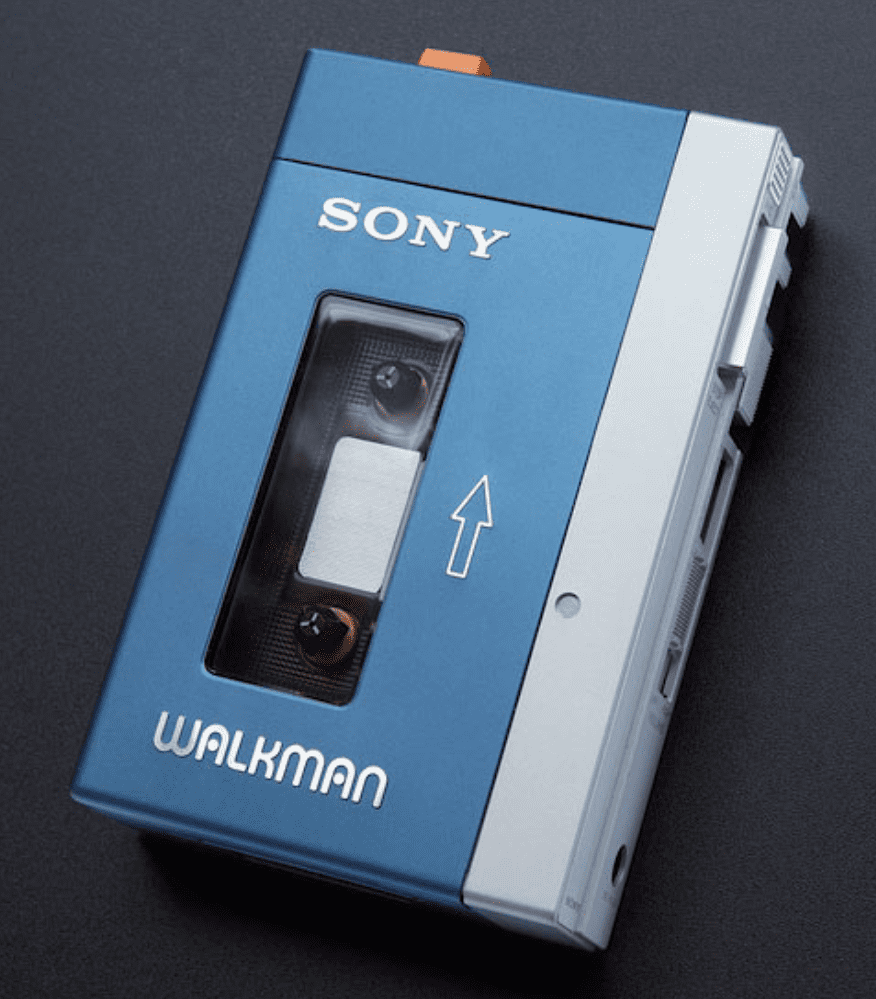
Sony co-founder Masaru Ibuka wanted a way to listen to music during long flights without disturbing others. Engineers re-imagined the bulky tape recorder, stripping away recording functions and focusing on lightweight playback. The result was the TPS-L2, the very first Walkman. It was blue and silver, compact, and paired with lightweight headphones a futuristic shift that felt like magic in the palm of your hand.
Redefining Personal Listening
The Walkman did more than shrink technology. It redefined the act of listening itself. For the first time, music became private. You could walk through a crowded city and still be lost in your own world of sound. The phrase “soundtrack to your life” suddenly made sense, because everyone could carry one in their pocket.
A Cultural Earthquake
By the 1980s, the Walkman wasn’t just a gadget it was a symbol of youth culture. Joggers strapped it on, commuters tuned out the noise, and teenagers filled mix tapes with their favorite songs. The design evolved: dual jacks for sharing, auto-reverse for continuous play, sleeker bodies in bright colors. The Walkman became fashion, lifestyle, and identity all at once.
Legacy That Echoes
Though CDs, MP3 players, and streaming eventually pushed the cassette aside, the Walkman’s influence never faded. It laid the groundwork for every portable music player that followed, from the iPod to today’s smartphones. More than a device, it was a declaration: music should move with us, wherever we go.