
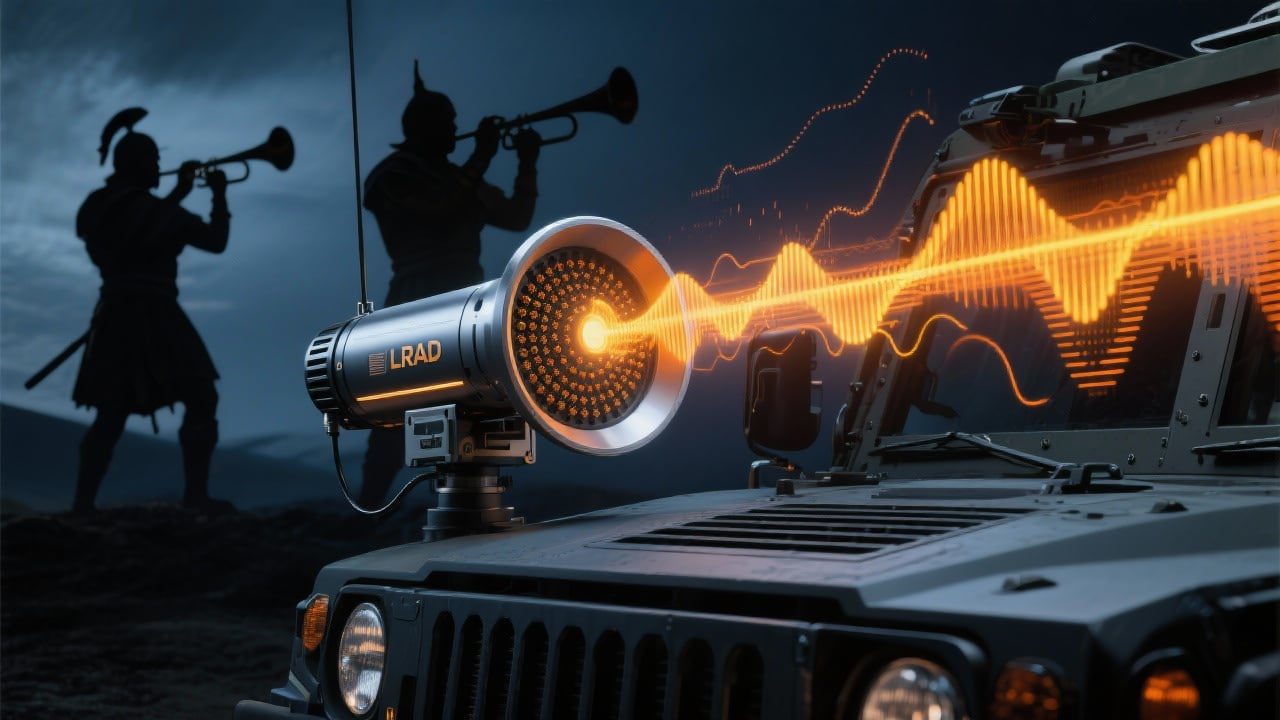
Sound has always been more than music or communication. It has been a tool, a weapon, and sometimes a danger. From ancient battlefields to modern city streets, humans have learned to bend acoustics not only for harmony but for control and fear.
Ancient Echoes of Warfare
The weaponization of sound dates back thousands of years. The biblical story of Joshua’s army toppling the walls of Jericho with trumpet blasts may blur myth and history, yet it illustrates how early societies recognized sound’s force.
Across cultures, war drums, horns, and battle cries were designed not only to communicate but to terrify, amplifying courage among allies while striking dread in enemies.
The Modern Era: From Psychological Warfare to Precision Weapons
World War II and Vietnam
In 1942, during the siege of Stalingrad, Soviet forces blasted Argentine tangos through loudspeakers to keep German troops awake. Two decades later, in Vietnam, U.S. forces escalated the use of sound: blaring insults, eerie animal calls, and music to exhaust and demoralize enemy soldiers.
The Birth of Modern Sonic Weapons
The 2000 USS Cole bombing spurred the U.S. Navy to develop a safer way to warn vessels. By 2003, the Long Range Acoustic Device (LRAD) emerged. It projected highly focused, powerful beams of sound, marking the dawn of modern sound cannons.
The Technology Behind Sound Weapons
How Sound Becomes a Weapon
- Volume: Devices can exceed 160 decibels, louder than a jet engine.
- Clarity: They remain intelligible at long distances, unlike muffled bullhorns.
- Directionality: Focused beams allow precision targeting over wide ranges.
Types of Acoustic Weapons
- Audible Range Devices: LRADs, capable of speech transmission up to 5 kilometers.
- Ultrasonic Devices: Tools like the Mosquito that target young ears with high frequencies.
- Infrasonic Weapons: Experimental, low frequency systems linked to nausea, disorientation, or structural damage.
Beyond the Battlefield: Civil and Commercial Uses
- Maritime Security: Used by over 25 navies, including in 2005 when the Seabourn Spirit cruise ship repelled pirates.
- Law Enforcement: Deployed at the 2009 G20 Summit in Pittsburgh and during protests in Ferguson.
- Wildlife Management: Airports like Changi in Singapore use them to deter birds.
- Emergency Management: Genasys products broadcast evacuation orders in disaster zones.
The Dark Side of Sound
Health Implications
Pain begins around 120 dB, but LRADs and similar systems can reach 160 dB or more. Documented effects include permanent hearing loss, cardiovascular stress, and internal organ damage in animal studies.
Ethical and Legal Concerns
Acoustic beams cannot distinguish between combatants, protesters, journalists, or bystanders. This indiscriminate impact raises urgent ethical questions. Human rights groups warn of misuse in policing and crowd control.
Mysterious Incidents
Cases such as the Havana Syndrome highlight lingering suspicions of weaponized sound or energy devices, though definitive causes remain uncertain.
The Future of Acoustic Technology
Expanding Capabilities
By 2022, LRAD systems offered 360 degree mass notification coverage over 14 square kilometers, with ever greater reach and precision.
Proliferation and Regulation
While firearms face strict laws, sound weapons occupy regulatory gray zones. Medical and audiology organizations warn of long term health risks, yet oversight remains minimal.
Conclusion: The Double Edged Symphony
From Jericho’s trumpets to Genasys sound cannons, the story of sound weapons reveals both brilliance and peril. These devices protect ships, save lives in emergencies, and manage wildlife conflicts. Yet they also risk abuse, causing pain, injury, and psychological harm.
As technology advances, society must decide: do we embrace sound as a guardian or fear it as an oppressor? The physics that give us music and conversation can just as easily deliver trauma. Ensuring that human rights are not drowned out by the roar of progress is the challenge of our acoustic future.