The Moment the Lock Turned
For years, independent producers stood in a dim hallway, feeling the vibrations of a new era humming behind a locked door. AI was roaring just out of reach powerful, exciting, sometimes brilliant, but always shadowed by uncertainty. Songs made with these tools felt like they lived in legal twilight. What you created today might vanish tomorrow. What you imagined might never be releasable. And no matter how bold or innovative you were, the industry’s silence made everything feel temporary.
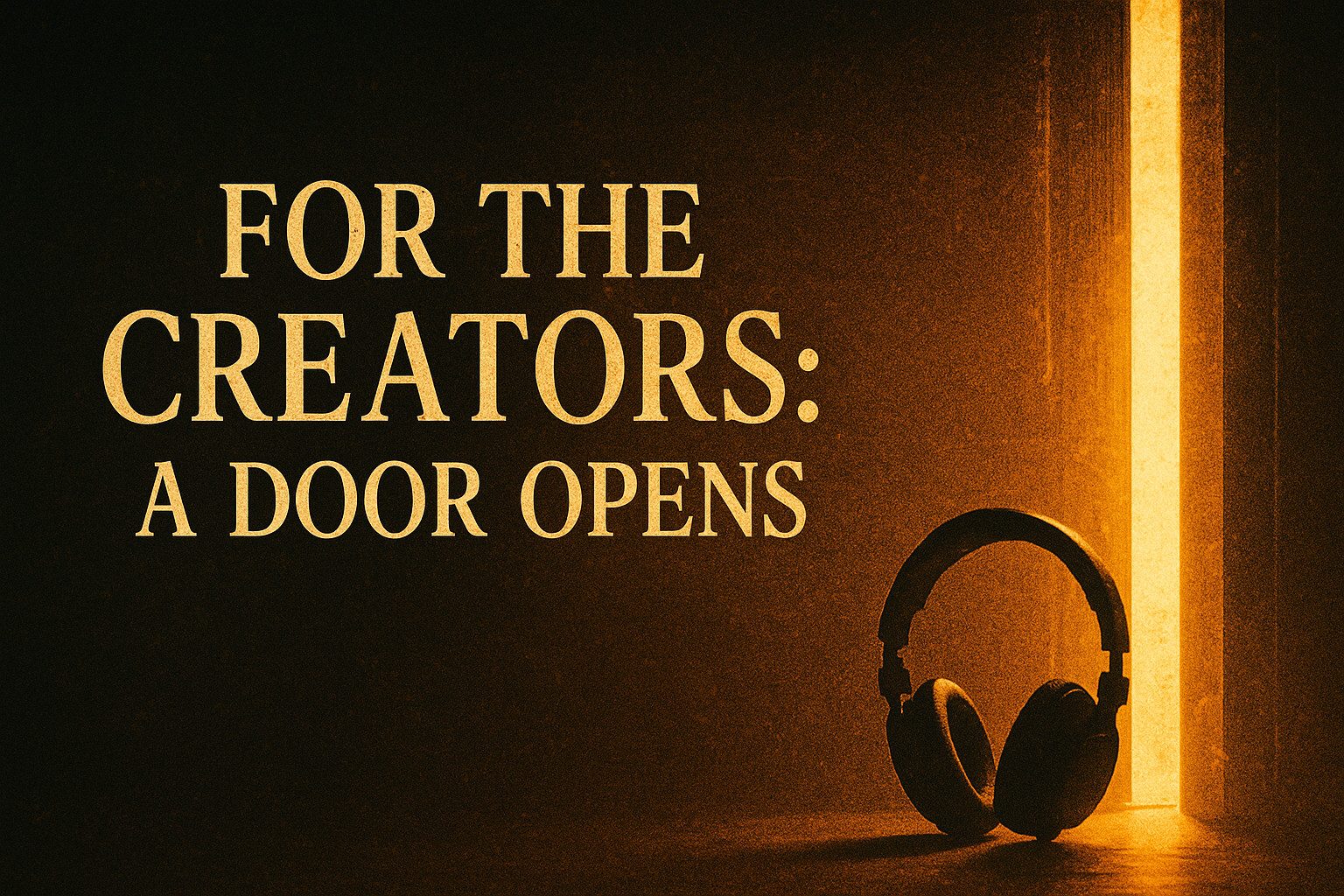
That all changed the moment Universal Music Group aligned with Udio. It was more than a partnership. It was the unmistakable click of a deadbolt releasing. Suddenly, the door that creators had been waiting to enter for years didn’t just crack open it swung wide, and the light from the other side spilled across the floor.
For the first time, it felt like the major powers of the industry weren’t fighting against creators using AI… they were finally inviting them in.
A New Creative Frontier
The UMG × Udio deal marked the end of the AI “wild west” and the start of a new, structured, artist-respecting landscape. Instead of creators being trapped between innovation and fear, they now have a space to explore without looking over their shoulder. AI isn’t a threat, isn’t a shortcut, isn’t a loophole it becomes an instrument, one that stands beside your keyboard, your mic, your DAW, and your imagination.
Remixing, reimagining, and transforming catalog music can finally be done inside a system that supports both the creator and the original artist. For once, the tools aren’t built on unclear data or vague promises they’re grounded in real licenses, real permissions, and real compensation for the musicians whose work helps train them. That’s a massive shift. It means that what once felt like taboo experimentation now becomes a legitimate part of the workflow.
And there’s something strangely freeing about that.
Instead of wondering whether an AI-generated melody resembles something “too closely,” creators can finally focus on the art again. They can lean into the inspiration, explore new genres, reshape classics, and blend sonic worlds that once lived oceans apart. The fear evaporates, leaving room only for creation.
The Studio Changes Shape
In this new era, AI begins to feel less like a separate technology and more like a session player who never sleeps. It can help draft ideas, spark melodies, test arrangements, and generate rough demos at the speed of thought. The point is not to replace the musician it’s to empower them.
Producers can start a morning with a raw concept, build a full arrangement by lunch, and refine every detail by evening without burning out or losing momentum. Instead of waiting for inspiration to return, you can collaborate with it. Instead of hitting a wall, you can leap over it. The studio becomes a living, breathing space again half human instinct, half machine precision.
What makes this moment different from all previous AI experiments is that now, creators can release their work confidently. Songs generated with the help of these new licensed systems won’t be trapped behind content filters or silently removed by automated copyright takedowns. The pipeline from idea → creation → release finally becomes clear. Artists and producers know exactly where they stand, and that security births creativity.
The Human Vision Still Leads
It’s easy to imagine AI as a giant engine churning out endless sound, but the truth is far more personal. AI doesn’t tell stories. It doesn’t live through heartbreak or spiritual renewal. It doesn’t know the feeling of standing in front of a small-town crowd or staying up at 3 AM chasing the perfect snare.
Creators do.
And that’s what makes this moment powerful.
The UMG × Udio partnership isn’t about machines making music. It’s about people—the bedroom producers, the small studios, the independent songwriters, the rising artists finally being given tools that respect both their creativity and the creators who came before them. The future of music won’t be written by AI. It will be written by humans who know how to use AI as part of their craft.
Why This Door Matters
Every major leap in music began with this same blend of fear and hope. Synthesizers were once called “cheating.” Drum machines were labeled “soulless.” Autotune was mocked before becoming a cultural signature. Streaming was laughed at before reshaping the world.
Now AI steps into that lineage not as a replacement for musicians, but as the next instrument waiting to be mastered.
This open door matters because it gives creators permission to dream again. It lets experimentation flourish without the shadow of risk. It grants independent producers the same technological reach once reserved for the biggest labels. And it ensures that innovation, for once, is something everyone can participate in.
Step Into the Light
This moment won’t last forever. Early adopters will benefit the most, shaping the language, style, and workflow of AI-assisted music before the industry catches up. Whether you’re crafting beats, building full productions, designing your own toolkit, or developing a creative brand like GP Studio Music, now is the time to push forward.
The lock is gone.
The doorway is open.
And the next era of music creation is already humming with energy.
Walk through it and see what waits on the other side.
Keywords: AI music, Udio, Universal Music Group, music creation, licensed AI tools, music producers, hybrid workflow, creative technology, future of music, digital songwriting